

Previous Story
Honouring the Legacy of Vimy Ridge: Unity, Sacrifice, and Inclusive Remembrance in Toronto and Ottawa
Posted On 28 Apr 2026
Comment: Off
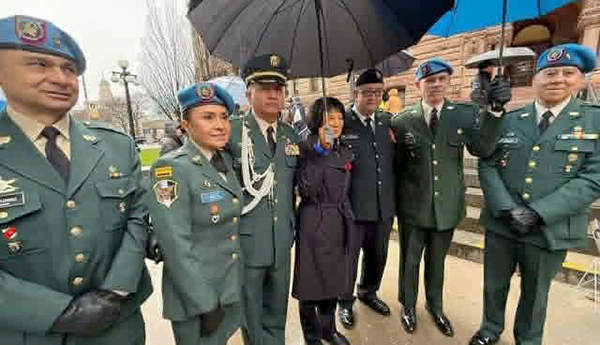
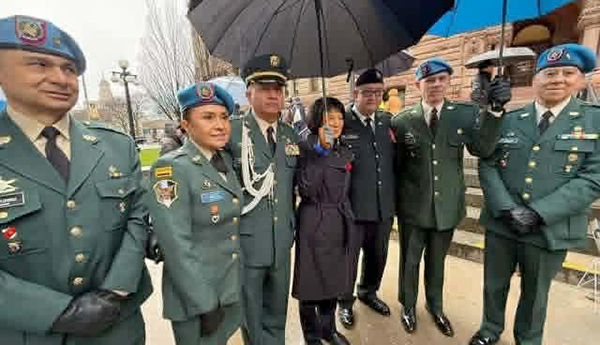
Mrs Olivia Chow the Mayor of Toronto (Center).
By Capt Rey Garcia-Salas.- The commemoration of the Battle of Vimy Ridge stands as one of the most solemn and defining expressions of remembrance in Canada. It is not only a tribute to a decisive moment in history, but a reaffirmation of the values that continue to shape the nation such as courage, unity, sacrifice, and an enduring commitment to peace.
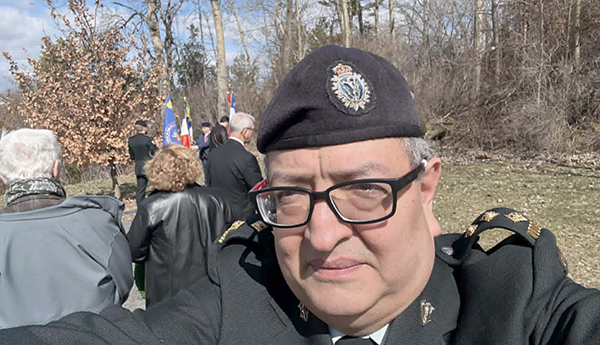
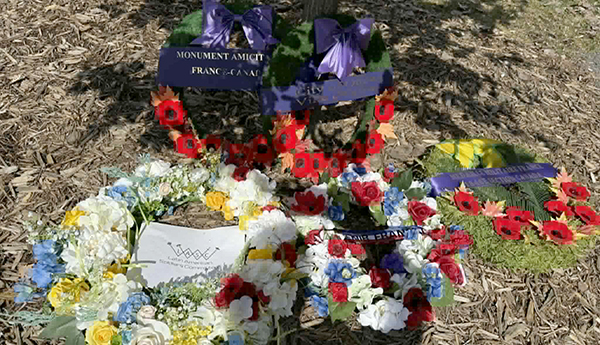
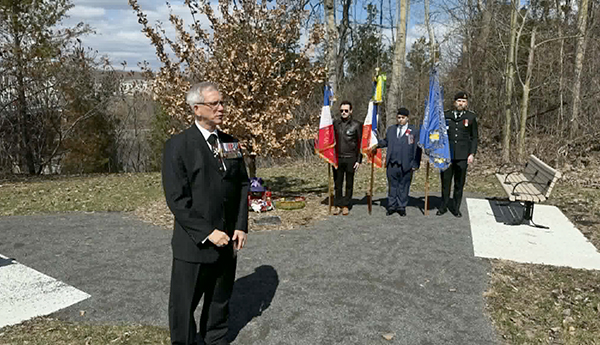
In April 2026, this legacy was honoured through two closely connected ceremonies in Ottawa and Toronto, forming a continuous and meaningful national reflection. The Ottawa commemoration, held at the Vimy Memorial Bridge one day prior, offered a solemn and intimate setting where Capt Rey Garcia-Salas laid a wreath on behalf of the Latin American Soldiers Committee (LASC). In the presence of Le Souvenir Français, veterans, and community representatives—including Christophe Baldacchino and Dr. André M. Levesque. The ceremony reflected a shared understanding that remembrance is both an act of honour and a responsibility of transmission.
This message resonated clearly through the words of Christophe Baldacchino, who emphasized that to remember is not only to honour those who fought for freedom, but also to ensure that future generations carry forward the values of courage, commitment, and solidarity that united Canada and France during the First World War. His reflection provided a unifying thread between past sacrifice and present responsibility, reinforcing that remembrance must live beyond monuments within people, communities, and actions.
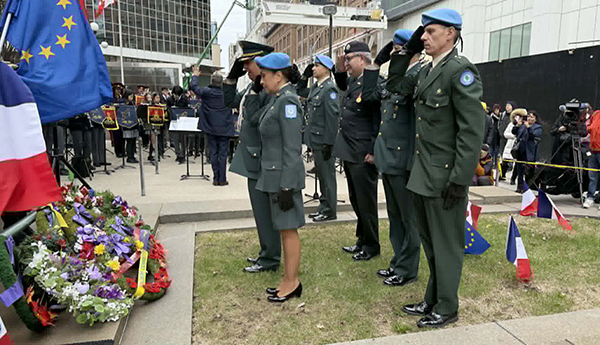
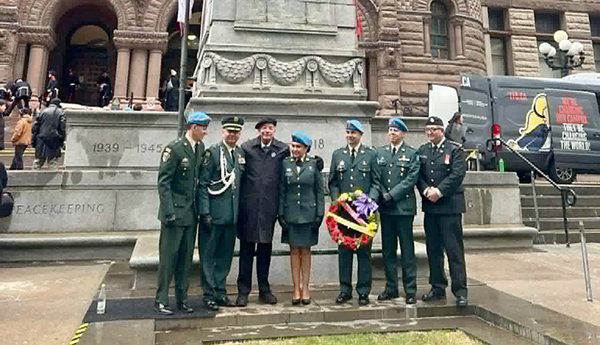
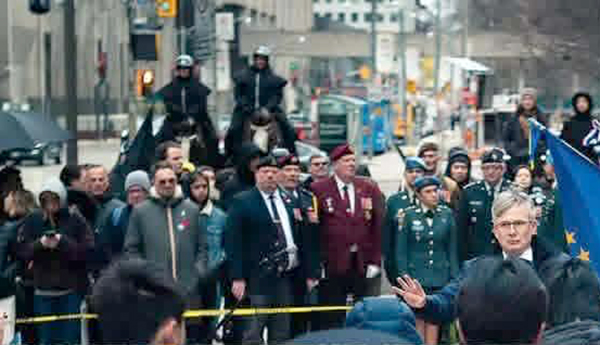
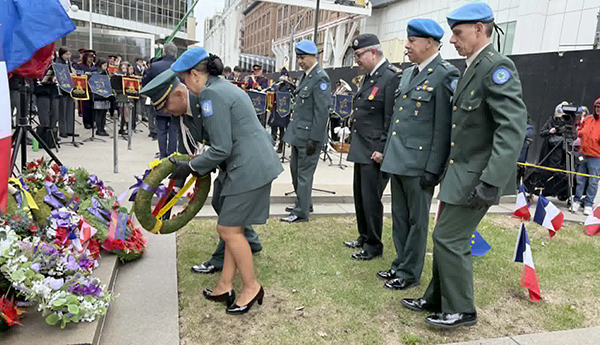
The following day, on 12 April 2026, the national tribute continued at the Cenotaph at Old City Hall in Toronto, marking the 109th Anniversary of the Battle of Vimy Ridge . Under the distinguished guidance of Master of Ceremonies Gérard Poupée, the ceremony unfolded with precision, dignity, and purpose. The presence of representatives from the diplomatic corps, the Canadian Armed Forces, veterans, cadets, and youth as well as civic and international leaders such as Mr Bertrand Pous the senior diplomatic representative of France and Mrs Olivia Chow the Mayor of Toronto reinforced the enduring bond between Canada and France, forged in shared sacrifice.
A defining and unifying moment of the Toronto ceremony was the wreath-laying on behalf of the Latin American Soldiers Committee. The tribute was led by Colonel Leonel Garcia representing Colombia in his official capacity accompanied by members of the Colombian Reserve Military: Major José Luis Parra, Major Cesar Augusto Chisica, Major Ingrid Gracia Mora, and Lieutenant Álvaro Javier Orrantia, alongside Ms. Betsy Requena and Capt Rey Garcia-Salas, this act symbolized unity across nations and generations linking those who served in the past with those who continue to serve today.
In April 1917, over four days of intense combat, approximately 3,600 Canadian soldiers lost their lives and thousands more were wounded. Yet, through unity of effort and determination, the Canadian Corps secured a victory that would come to symbolize Canada’s emergence as a nation on the world stage.
It is within this historical and moral context that the presence of the Latin American Soldiers Committee finds its deepest meaning. LASC participates in these commemorations not as observers, but as stewards of a legacy that transcends borders. Since the First World War, individuals from across Latin America—many of whom came to Canada voluntarily—have answered the call to serve. They stood shoulder to shoulder with Canadians and Allied forces, united not by origin, but by shared values: freedom, human dignity, and the pursuit of a better future.
Their contributions are not peripheral—they are integral to Canada’s story. To honour Vimy Ridge is therefore to honour them as well. It is to recognize that the victory achieved in 1917 was built on collective sacrifice—one that included those who journeyed from distant lands to defend ideals greater than themselves.
For the Latin American Soldiers Committee, participation in these ceremonies is both a responsibility and a commitment: to ensure these stories are preserved, these sacrifices are acknowledged, and that future generations understand the full breadth of those who helped shape this nation.
Across Ottawa and Toronto, one message emerged with clarity and purpose: remembrance is not passive. It is a conscious and collective act—one that calls upon each of us to uphold the principles of freedom, unity, solidarity, and peace.
As we gather at places of memory, we are reminded that remembrance is a bridge—connecting past sacrifice with present service and future responsibility. Through this enduring commitment, we honour not only those who fell, but the values they entrusted to us.
We will remember them.